
Slab Leak Warning Signs, Causes and Repair Options in DFW
A slab leak is a hidden water or drain line leak beneath a home’s concrete foundation. This guide explains the warning signs Dallas-Fort Worth homeowners should watch for, why North Texas soil movement can contribute to slab leaks, how plumbers locate the problem, and when spot repair, rerouting, or repiping may be the best solution.
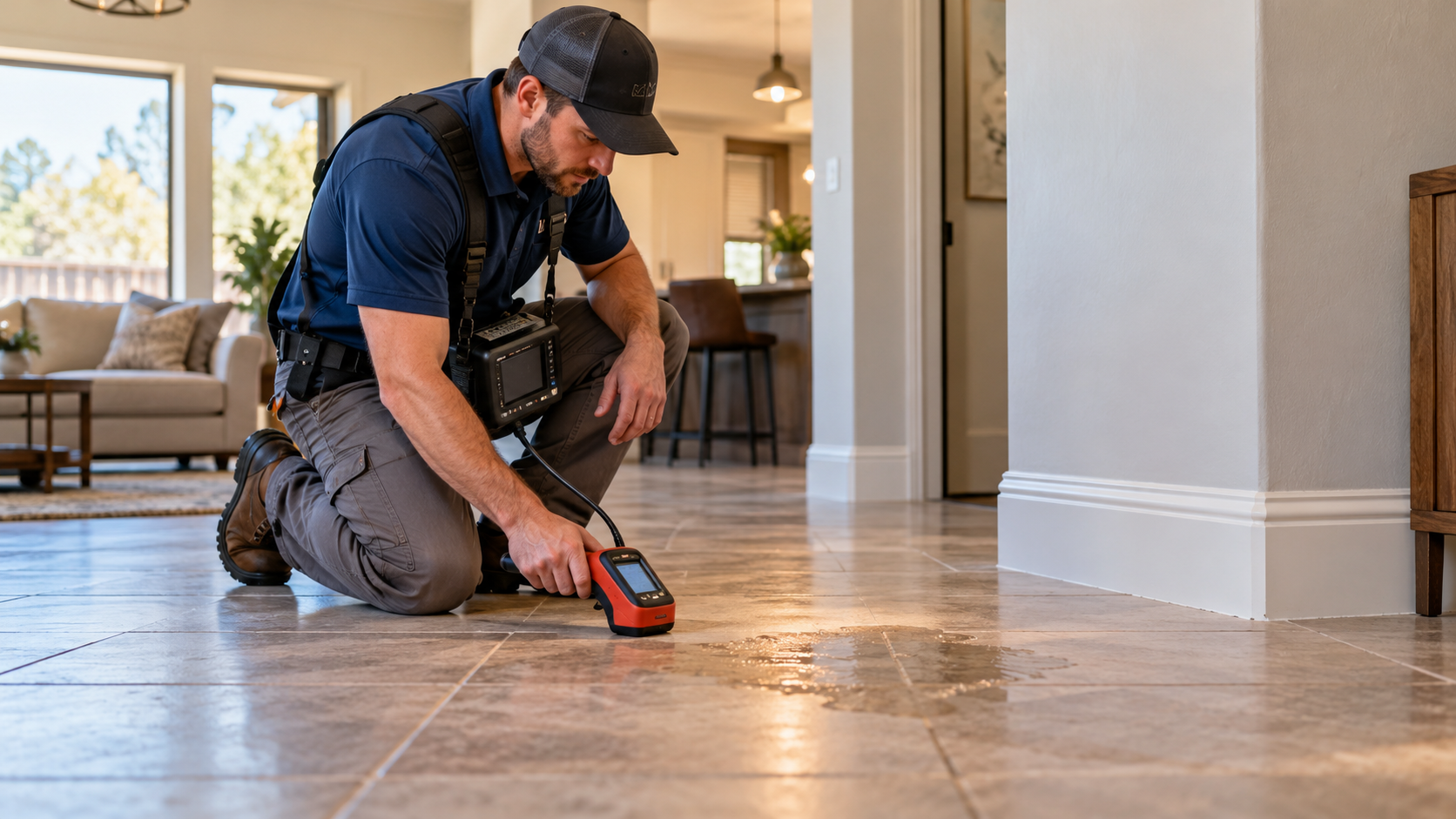
A slab leak is a leak in a water or drain line that runs under your home's concrete foundation. Common signs are a jump in your water bill, the sound of running water when everything is off, and warm or damp spots on the floor. In North Texas, shifting clay soil is one of the main causes.
What Is a Slab Leak?
A slab leak happens when a pipe buried in or under the concrete slab cracks, corrodes or wears through. Most Dallas-Fort Worth homes are built on slab foundations, so the water supply lines and drain lines run underneath the concrete instead of through a crawl space or basement.
Because the leak is out of sight, it can run for weeks before anyone notices. Water that escapes under a slab can soak the soil, damage flooring and, over time, add stress to the foundation. A leak on the hot water line also wastes the energy your water heater spent heating that water. If you notice any of the signs below, On Time Experts can confirm whether you have a slab leak before anyone opens the floor.
What Are the Warning Signs of a Slab Leak?
The signs of a slab leak are often small at first. Look for any of these:
- A water bill that's higher than usual with no change in how you use water
- The sound of running water when every faucet and appliance is off
- Warm spots on tile or hardwood floors, a common sign of a hot water line leak
- Damp carpet, musty smells or mildew along baseboards
- Cracked or lifting floor tiles, or new cracks in walls
- Low water pressure throughout the house
- A water heater that runs constantly
You can check for a hidden leak yourself with your water meter. Turn off every faucet, shower, toilet, ice maker, irrigation system and appliance that uses water. Write down the meter reading and look at the small leak indicator dial. Wait an hour or two without using any water, then check again. If the reading changed or the indicator moved, water is going somewhere. A slab leak is one possibility; a running toilet or a leaking outdoor line are others. The test only catches leaks on the water supply side, since a drain line leaks only while water is running down it.
What Causes Slab Leaks in North Texas Homes?
Slab leaks usually come from soil movement, pipe wear or both. North Texas has a specific problem with soil. About 1.5 million acres of the Blackland Prairie, which stretches from north of Dallas to San Antonio, sit on Houston Black clay, a soil that shrinks and swells sharply as it dries out and gets wet. When the ground under a slab swells after heavy rain and shrinks in a dry summer, the slab and the pipes under it move with it.
Other common causes:
- Abrasion: hot water lines expand and contract as they heat up and cool down. Over years, a pipe that rubs against concrete or gravel can wear thin.
- Corrosion: copper lines can corrode over time, especially in older homes or where water chemistry is hard on metal pipe.
- High water pressure: pressure that runs too high strains joints and fittings everywhere in the house, including under the slab.
- Installation problems: a pipe that was kinked, dented or poorly joined when the house was built is more likely to fail later.
How Do Plumbers Find a Slab Leak?
Plumbers find slab leaks with tools that don't require breaking concrete first. On Time Experts uses pressure testing to confirm a leak and narrow down which line is losing water, acoustic equipment to listen for water escaping under the slab, and infrared thermal imaging to spot the warm trail of a hot water leak.
Finding the leak accurately is what keeps the repair small. A plumber who pinpoints the spot can open a small section of floor rather than tearing up a whole room. Learn more about slab leak detection and repair from On Time Experts.
How Do You Fix a Slab Leak?
Most slab leaks on water lines are fixed one of three ways, and the right one depends on the pipe's condition, its age and whether this is the first leak.

A spot repair fixes the immediate leak but leaves the rest of the old pipe in place. If one section failed from corrosion or soil movement, other sections may follow. That's why a second or third slab leak is a good time to consider repiping, which moves the water lines out of the slab entirely. A leaking drain line under the slab is a different job and is usually repaired at the break.
Ask your plumber what caused the leak, what condition the rest of the line is in, and what each option would mean for your floors.
What Should You Do If You Think You Have a Slab Leak?
Act soon, in this order:
- Do the water meter test described above to confirm water is being lost.
- If the leak seems large, or you see water coming up through the floor, close the main water shutoff.
- Turn off the water heater if you suspect the hot water line, following the manufacturer's directions.
- Take photos of damp spots, cracks and your water bill for your records and your insurer.
- Call a licensed plumber for leak detection.
Frequently Asked Questions
Will homeowners insurance pay for a slab leak?
It depends on your policy. Some policies help with the cost of accessing the pipe or with water damage, while the pipe repair itself may not be covered. Call your insurer early and keep photos and plumber reports.
Can a slab leak damage my foundation?
Water under a slab can soften or move the soil beneath it, and in clay soil that can add stress to the foundation. Fixing the leak promptly limits how much water reaches the soil.
How long can a slab leak go unnoticed?
Weeks or even months, especially on a cold water line, which doesn't create warm spots. Rising water bills are often the first clue, which is why the meter test is worth doing.
Can I fix a slab leak myself?
Finding and repairing a leak under concrete takes specialized detection equipment and plumbing work below the floor. Homeowners can confirm a leak with the meter test, but the repair is a job for a licensed plumber.
Will I have more slab leaks after the first one?
Possibly. If the first leak came from corrosion or soil movement, the same forces act on the rest of the pipe. Ask your plumber about the condition of the remaining line before choosing a repair.
Think You Have a Slab Leak?
On Time Experts finds and repairs slab leaks for homeowners across Dallas-Fort Worth, including Garland, Plano, Richardson and Mesquite. If another company has already quoted a repair, see the Free Second Opinion on our specials page, or call 281-694-7946 to schedule leak detection.
Save on Your Next Home Service
Keeping your home comfortable and running smoothly shouldn’t have to stretch your budget. Explore current specials from On Time Experts and save on select heating, cooling, plumbing, and indoor air quality services. Check out our latest offers and schedule your service today.