
Why Your AC is Freezing Up
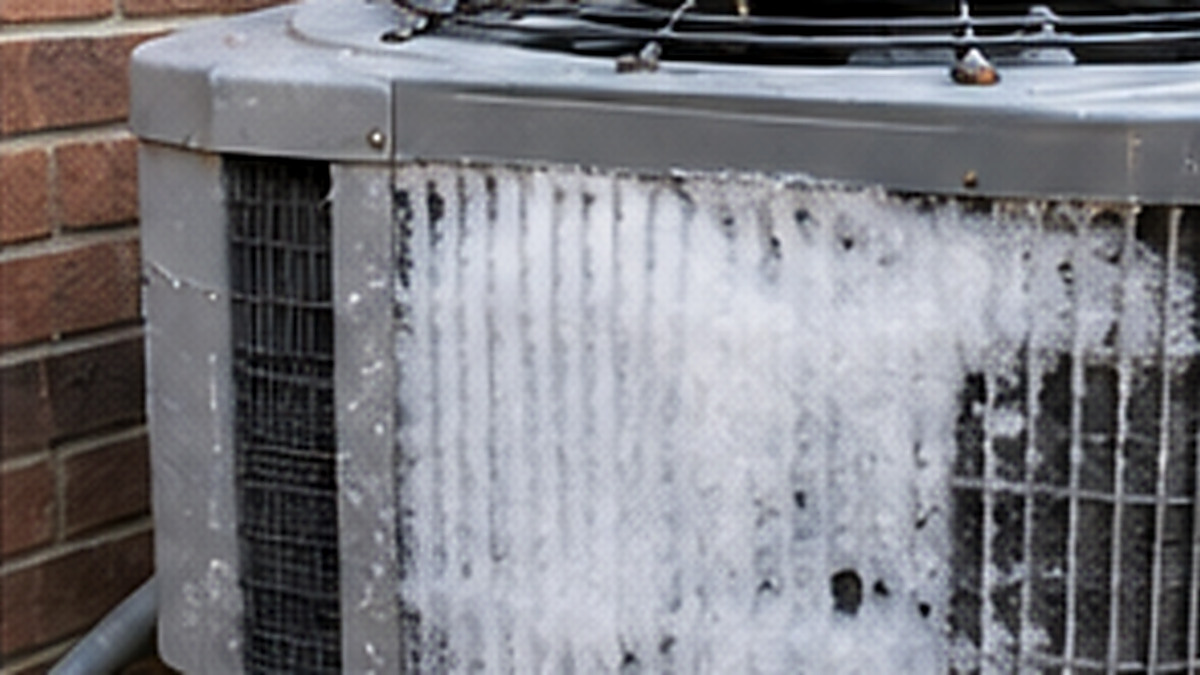
If your AC is freezing up, the most common causes include restricted airflow, refrigerant problems, or malfunctioning components. A dirty air filter, blocked evaporator coil, or failing blower can prevent the system from absorbing enough heat, allowing moisture on the coil to freeze.
An air conditioner can freeze even when it's extremely hot outside. The problem is usually related to conditions inside the cooling system rather than the outdoor temperature alone.
If you notice ice on your refrigerant lines, weak airflow, or an air conditioner running without properly cooling your home, stop normal cooling operation and investigate the cause before continuing to use the system.
What Causes an Air Conditioner to Freeze Up?
Your air conditioner uses refrigerant to absorb heat from indoor air. The evaporator coil becomes cold as this process occurs, while moisture from the air normally condenses on the coil and drains away.
When the coil temperature drops below freezing, that moisture can turn into ice.
Several problems can cause this to happen.
1. Dirty Air Filters and Restricted Airflow
A clogged air filter can significantly reduce the amount of air moving across your evaporator coil.
With less warm air passing over the coil, the refrigerant absorbs less heat. Under certain conditions, the coil becomes cold enough for condensation to freeze.
Other airflow restrictions include:
- Blocked return-air grilles
- Closed or obstructed supply vents
- Dirty evaporator coils
- Ductwork restrictions
- Incorrectly sized or overly restrictive filters
If your AC is freezing up, checking the accessible air filter is one of the simplest first steps.
Replace a dirty disposable filter with the correct type and size recommended for your system.
2. Low Refrigerant or Refrigerant System Problems
Refrigerant-related problems can also contribute to frozen AC coils.
An incorrect refrigerant charge can change system pressures and temperatures, potentially allowing portions of the evaporator coil to become unusually cold.
In a properly sealed system, refrigerant isn't supposed to be routinely consumed.
If the charge is low, an HVAC technician should investigate whether a leak or another issue is responsible.
Simply adding refrigerant without diagnosing the problem may not provide a lasting solution.
Refrigerant testing and repairs should be handled by appropriately certified professionals.
3. Dirty Evaporator Coils
Over time, dust and other particles can accumulate on the evaporator coil.
This buildup interferes with heat transfer and may contribute to freezing, especially when combined with reduced airflow.
The evaporator coil is usually located inside the home's air handler or connected to the indoor furnace assembly.
Unlike a typical air filter, it may require professional access and cleaning.
4. Blower Motor or Fan Problems
Your AC depends on the indoor blower to circulate air through the system.
If the blower stops operating, runs incorrectly, or cannot deliver adequate airflow, the evaporator coil may become too cold.
Warning signs can include unusually weak airflow, changing fan operation, or unexpected system noises.
A technician can check the blower, controls, airflow, and related electrical components.
5. Other Operating or Control Problems
Less common causes may involve refrigerant-metering components, control issues, or operating conditions outside the equipment's intended range.
Some systems may also experience problems when cooling operates under unusually low outdoor temperatures.
However, during Dallas summers, restricted airflow and refrigerant-related problems are important possibilities to investigate first.
What Should You Do When Your AC Freezes Up?
Continuing to run an air conditioner while ice accumulates can contribute to additional equipment problems.
Follow these precautions.
Step 1: Turn Off Cooling
Set the thermostat's cooling mode to off.
This stops the normal cooling cycle and allows the frozen components to begin thawing.
Don't lower the thermostat further to try to make the system cool faster.
Step 2: Check the Air Filter
If the filter is easily accessible, inspect it for heavy dust accumulation.
Replace it if necessary, using the correct replacement specified for your equipment.
You can also check that accessible supply vents and return grilles aren't blocked by furniture or other objects.
Avoid opening electrical compartments or attempting to access internal refrigerant components.
Step 3: Allow the System to Thaw
Ice can take several hours to melt, depending on how much has accumulated.
Some systems can use a fan-only setting to circulate air during thawing. However, this should only be done when the manufacturer allows it and there are no signs of electrical problems, water overflow, or blower malfunction.
If you're unsure, leave the system off.
Never scrape ice off coils, pour hot water over components, or use a hair dryer or other heat source to accelerate thawing.
Step 4: Watch for Water Problems
Melting ice can produce more water than the normal condensate drainage system can handle.
If water is collecting near electrical equipment, leaking through a ceiling, or overflowing from the air handler, keep the affected equipment off and arrange professional service.
Step 5: Address the Underlying Cause
Thawing removes the ice, but it doesn't necessarily correct what caused the freezing.
If the air conditioner freezes again, has weak airflow, or still fails to cool properly, schedule professional AC repair.
Frozen AC Troubleshooting Guide
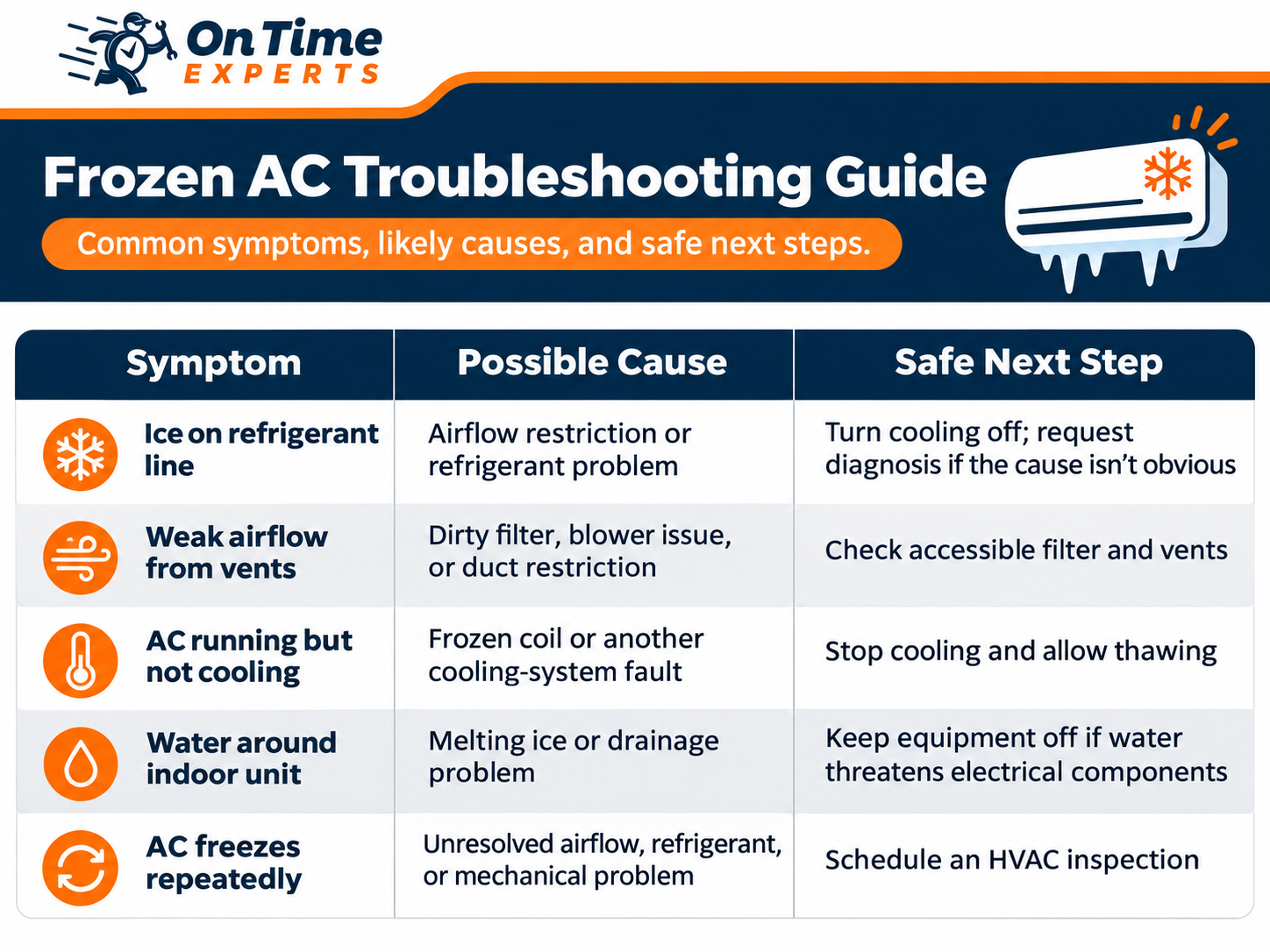
These symptoms help narrow the possibilities, but they don't establish a diagnosis on their own.
Why Does My AC Freeze When It's Hot Outside?
It's understandable to assume freezing only happens during cold weather.
However, the evaporator coil operates at a much lower temperature than the outdoor air.
When airflow or refrigerant conditions cause the coil to become excessively cold, ice can form regardless of whether it's 75 degrees or well above 90 degrees outside.
Long cooling cycles during North Texas summers may make an existing problem more noticeable, but hot weather itself isn't the direct cause of frozen coils.
Why Is There Ice on My AC Refrigerant Line?
Ice on the larger insulated refrigerant line is often associated with excessively cold conditions in the indoor cooling system.
It can indicate restricted airflow, a refrigerant-related issue, or another operating problem.
The presence of ice doesn't automatically mean the refrigerant charge is low.
A professional can evaluate the full system rather than attempting to diagnose the issue from one visible symptom.
How Can You Prevent Your AC From Freezing?
Not every frozen AC can be prevented, but regular maintenance can help reduce common contributing problems.
Useful practices include:
- Checking and replacing filters according to equipment requirements
- Keeping supply and return vents unobstructed
- Scheduling professional inspections of airflow and blower operation
- Having evaporator coils inspected and cleaned when necessary
- Addressing unusual cooling performance before freezing becomes severe
Preventive AC maintenance can also help identify developing refrigerant, airflow, and drainage issues.
FAQs About Frozen Air Conditioners
Will a frozen AC fix itself after thawing?
Not necessarily. Thawing removes the ice but doesn't correct a dirty coil, refrigerant leak, or malfunctioning blower.
How long does a frozen air conditioner take to thaw?
It may take several hours, depending on ice buildup and conditions. Don't restart cooling until the ice has melted and the underlying problem has been addressed.
Can a dirty filter really make an AC freeze?
Yes. A clogged filter can restrict airflow enough to contribute to evaporator-coil freezing.
Should I run the fan when my AC is frozen?
Fan-only operation may be appropriate for certain systems, but follow equipment instructions and avoid it when water overflow or electrical problems are present.
Does a frozen AC need to be replaced?
Not automatically. Many freezing problems involve repairable airflow or refrigerant issues. Replacement should depend on equipment condition and repair findings.
Get Help With a Frozen AC in Dallas
If your air conditioner keeps freezing or isn't cooling properly after thawing, professional diagnosis can help identify the underlying problem.
On Time Experts provides air conditioning services in Dallas and surrounding communities, including Garland, Plano, and Richardson.
Contact On Time Experts to schedule an AC inspection and determine the appropriate repair.
Save on Your Next Home Service
Keeping your home comfortable and running smoothly shouldn’t have to stretch your budget. Explore current specials from On Time Experts and save on select heating, cooling, plumbing, and indoor air quality services. Check out our latest offers and schedule your service today.